
Season taking it’s toll? When should you get those footy ‘niggles’ checked?
As we head towards the pointy end of the football season, with finals just around the corner, it's pretty rare to find a player who feels 100%.
One of the most common things I hear in the clinic is:
"I thought it would settle on its own."
And, to be fair, sometimes it does.
But just as often, that little niggle hangs around, starts creeping into your performance, and eventually affects your ability to train or play.
Why are football injuries more common towards finals?
As the season goes on, the physical demands on your body continue to build.
The games matter more, the weather gets colder, and between training, matches, work and everyday life, recovery can become harder to prioritise.
Most sports injuries aren't caused by one major incident. More often, it's the gradual accumulation of training load over months that leaves muscles, tendons and joints irritated or overloaded.
That's why we often see more football players seeking treatment this time of year. It's usually not a brand-new injury. More often, it's something they've been managing for weeks that's finally started affecting how they're playing—or whether they can play at all.
Common football injuries we see
Heading into finals, some of the more common injuries we assess include:
- Hamstring strains
- Calf strains
- Hip and groin pain
- Knee pain
- Ankle sprains that haven't fully recovered
- Neck and shoulder soreness following contact
These injuries don't always stop you playing straight away, which is part of the problem. They can gradually chip away at your speed, confidence and performance if they're left unmanaged.
If possible, it's better to have these injuries assessed before finals rather than trying to manage them through the biggest games of the season.
When should you get a sports injury checked?
Not every ache needs treatment, and feeling stiff after a tough game is completely normal.
However, it may be worth having an assessment if:
- Pain lasts for more than a few days after a game
- The same injury keeps returning
- You're changing the way you run, kick or move because of pain
- You're relying on strapping or pain relief just to get through games
- You're losing confidence in that part of your body
Footballers are generally very good at pushing through pain.
The challenge is that by the time many people come in for help, they've often been compensating for weeks. That can make rehabilitation more complex and may prolong recovery.
The earlier an injury is assessed, the more opportunities there may be to identify contributing factors and develop an appropriate management plan.
How can an osteopath help with football injuries?
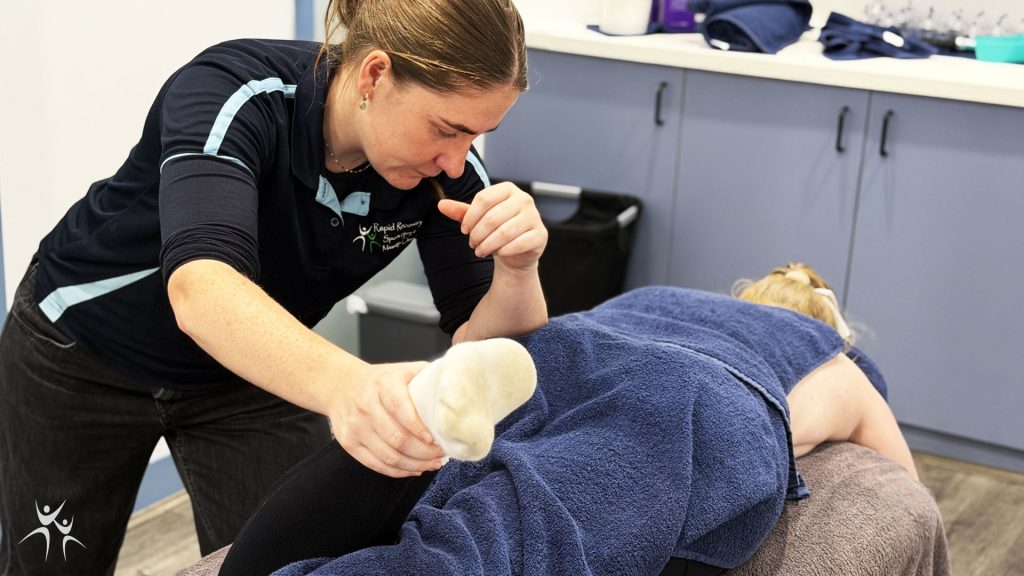
As osteopaths, we don't just look at where the pain is—we also assess the factors that may be contributing to it.
Every football injury is different, so treatment is tailored to the individual following a thorough assessment.
Depending on your presentation, management may include:
- Hands-on osteopathic treatment to help improve movement
- Individualised rehabilitation exercises
- Advice about training load and recovery
- Strategies to support your return to training and sport
We'll also assess factors that may have contributed to the injury, such as reduced mobility, muscle weakness, movement patterns or previous injuries that may be placing extra stress on other parts of the body.
Whether you're dealing with a hamstring strain, ongoing groin pain or a sore neck after one too many tackles, the aim is to help you understand what's contributing to your symptoms and support your recovery so you can return to doing what you enjoy.
If you've been putting up with a niggle that isn't improving, having it assessed early may help prevent it from becoming more difficult to manage later in the season.
