
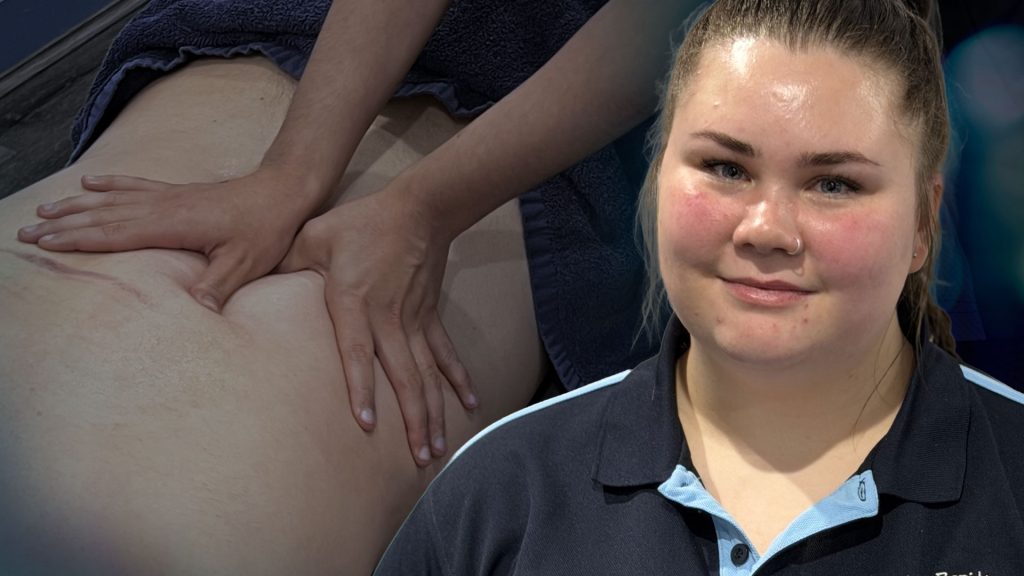
How I work as a Remedial Therapist to relieve lower back pain
Thinking outside the box to help your lower back pain
As a remedial massage therapist, I see so many clients with lower back pain.
Some spend hours sitting at a desk or behind the wheel. Others work in the trades or jobs that involve lifting, bending and repetitive physical work. And sometimes, lower back pain seems to appear without any obvious reason at all.
One thing I’ve learned as a practitioner is that when someone comes in with lower back pain, it’s important to look beyond the area that hurts.
Sometimes the problem isn’t just the lower back.
The muscles throughout our body work together in patterns. When one muscle becomes tight, restricted or isn’t working properly, other muscles can compensate or become inhibited.
The hips are a great example.
Your hips and lower back work together
Your hip flexors are located at the front of your hips. When these muscles become tight or shortened — something that can happen when we spend a lot of time sitting — they can affect the position and movement of your pelvis.
This can mean the muscles around your lower back have to work harder to help you stand upright and move normally.
Your glutes are another important part of the picture. If they aren’t engaging effectively, the muscles in your lower back may have to take on more of the work when you stand, walk, lift or move.
That’s why I don’t just focus on the spot where you feel pain.
My approach to treating lower back pain
When I’m treating someone with lower back pain, one of the first things I do is assess and mobilise the hips.
And the assessment starts from the moment you walk through the door.
I’m looking at how you walk, how you stand and how your hips and pelvis look from a postural perspective.
I’m asking myself questions such as:
- Are you leaning forward?
- Are you leaning to one side?
- How are you sitting?
- How do you get up from a chair?
- Do you need to grab onto something when you stand because of pain or weakness?
- Is one side moving differently from the other?
These observations can give me clues about where I need to look next.
For me, treating lower back pain is about thinking outside the box and looking at how different parts of the body may be contributing to the problem.
What can cause lower back pain?
There are many potential causes of lower back pain, and everyone is different. Some of the common things I see in the clinic include:
Muscle or ligament strain
Muscle or ligament strain is one of the most common causes of lower back pain.
It can happen after lifting something heavy, twisting awkwardly, making a sudden movement or simply doing more physical activity than your body is used to.
It doesn’t always have to be a major injury either. Everyday activities such as gardening, moving furniture, doing DIY or picking up children can put extra stress on the lower back.
Poor posture and prolonged sitting
Spending long hours sitting at a desk, driving, slouching on the couch or working on a laptop can contribute to stiffness and discomfort in the lower back.
When we stay in one position for long periods, the muscles and joints aren’t getting the regular movement they need.
This is something I see regularly with office workers and people who work from home.
It’s not necessarily about having “perfect posture” all day. Regular movement and changing positions are also important.
Herniated or bulging discs
The discs between the vertebrae in your spine act as cushions and help your spine move.
Sometimes a disc can bulge or herniate and irritate nearby nerves. This can cause lower back pain and, in some cases, pain that travels into the buttock or down the leg.
Pain that travels down the leg is often referred to as sciatica, although there can be several different causes of this type of pain.
Joint or facet joint irritation
The spine contains small joints called facet joints, which help control movement between the vertebrae.
When these joints become irritated or restricted, they can contribute to localised lower back pain and stiffness.
Some people notice that their pain is worse with certain movements, such as twisting or arching backwards, or after standing for long periods.
Heavy lifting and repetitive movements
If your work involves repetitive bending, twisting or lifting, your lower back is regularly being asked to work hard.
Trades, warehousing, nursing, childcare and many other physically demanding jobs can place repeated stress on the muscles and joints.
Even activities outside of work — such as weightlifting, gardening or DIY — can contribute to lower back pain, particularly when we suddenly do more than our bodies are accustomed to.
Weak or poorly coordinated core and back muscles
Your abdominal, back and gluteal muscles all contribute to supporting and moving your spine.
If these muscles aren’t working effectively together, other areas of the body may have to compensate.
This can happen with a sedentary lifestyle, reduced exercise or changes in activity levels.
Building strength and improving coordination, mobility and movement can all be useful parts of managing recurring lower back pain.
So what am I looking for when I treat lower back pain?
This is where I think it’s important to look at the whole picture.
If someone comes to me with lower back pain, I’m considering what they do every day and how they move.
Have they recently been lifting heavy objects?
Are they spending eight hours a day sitting at a desk?
Are they driving for long periods?
Are their hips feeling restricted?
Are their glutes working effectively?
Have they changed their exercise routine?
Are they compensating for an injury somewhere else?
There may not be one simple answer.
Sometimes it can be a combination of factors that have gradually built up over time.
That’s why I don’t believe in treating every person with lower back pain in exactly the same way.
My goal is to get you moving again
My role as a remedial massage therapist is to understand what your body is doing, identify areas that may be contributing to your discomfort and work with you to help improve your movement and manage your pain.
That might mean working on the lower back itself, but it might also mean looking at the hips, glutes, legs or other areas that could be influencing how you move.
Every person is different, and every treatment needs to be tailored to the individual.
My goal is simple: to help you get back to doing the things you love and moving with more confidence and less pain.
If lower back pain is getting in the way of work, exercise or everyday life, a remedial massage treatment may be one part of your overall approach to managing it.
If your pain is severe, persistent, follows an injury, or is accompanied by symptoms such as significant weakness, numbness or changes to bladder or bowel function, it’s important to seek medical assessment.