
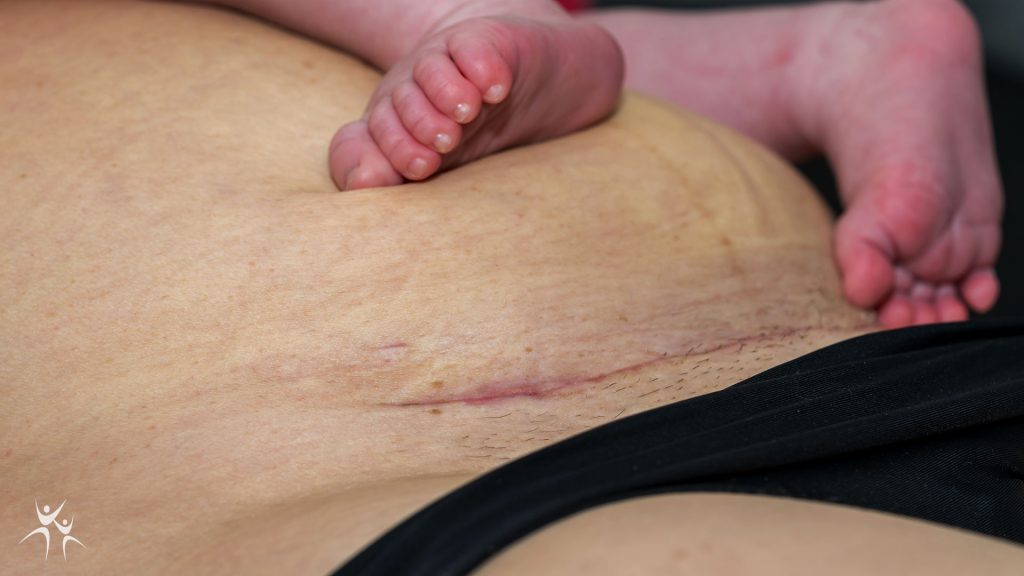
Understanding C-section scar release and how it works
A caesarean section scar is often treated as something that simply 'heals and fades.' But under the surface, it can be a little more complex. For many women, that scar can influence how their body feels and moves for months or even years after birth. This is where C-section scar release work comes in, and it’s a lot more nuanced than just massaging the area. It’s also important to note that this work can help with any abdominal scar - from laparoscopy, appendectomy etc, to non surgical wound scars also.
When a C-section is performed, multiple layers are cut through, including the skin, fascia, abdominal muscles, and uterus. The body repairs these layers quickly, prioritising closure over perfect organisation. The result is scar tissue, which is structurally different from the original tissue. It’s denser, less elastic, and doesn’t move with your body as well.
Scar tissue can also compress other structures in the area, impacting blood flow, lymphatic flow, and neural connections. This doesn’t just affect how your body moves, it can also influence how well the area heals. If tissue isn’t getting what it needs, it will heal suboptimally.
The body isn’t made of isolated parts. Everything is connected through fascia, a continuous web of connective tissue that surrounds and links muscles, organs, and structures. When a scar crosses these lines, it can create tension that pulls in multiple directions.
This is why a C-section scar can sometimes contribute to:
- Lower back and hip discomfort
- Pelvic floor dysfunction
- Poor breathing mechanics
- A persistent feeling of abdominal restriction
C-section scar release focuses on these deeper layers, not just the surface. It’s a hands-on approach that aims to improve how the scar moves relative to surrounding tissue, support blood and lymphatic flow, and promote connection to the area (and therefore better muscular control). Rather than aggressively breaking anything down, the goal is to gently encourage mobility and change.
One of the key intricacies is that scars don’t just restrict in one direction, they can adhere in multiple planes. A practitioner will assess how the scar moves up and down, side to side, and in rotation, while also feeling for how the tissue responds. Is it springy or does it feel stuck? Is there sensitivity or numbness? These findings guide the treatment.
The nervous system is another important layer. Scar tissue can alter local sensation, leaving areas feeling numb, overly sensitive, or uncomfortable. Part of this work involves gently reintroducing sensory input, helping the brain better map the area. This can reduce discomfort and improve control, particularly in the abdominal wall.
There’s also a strong relationship between the scar and the deeper core system. The abdominal wall, diaphragm, and pelvic floor work together to manage pressure and support movement. If a scar is restricting the abdominal wall, this system can be disrupted. This might show up as difficulty engaging the core, a feeling of weakness, or symptoms like doming or pressure. Improving the mobility of the scar can help restore more natural coordination.
Timing isn’t as limiting as many people think
While early treatment can be helpful once healing has occurred, scar release can still be beneficial years (or decades) later. The body is pretty adaptable when given the right input.
It’s also not one-size-fits-all
Some people need very gentle work, especially if the area feels sensitive or emotionally loaded, while others may benefit from deeper techniques. A good practitioner will always adjust based on your body’s response. Treatment will include hands-on treatment, simple at-home techniques, breathing work, and movement strategies.
C-section scar release sits at the intersection of physical and neurological recovery. It recognises that healing isn’t just about closing a wound, but about restoring function, comfort, and confidence in your body.
And for many women, it can be a missing piece in postnatal recovery that they didn’t even realise was available.
So if you think that it is your scar causing pain and dysfunction, scar release therapy may be worth exploring. You can book with Haydie or contact her directly at [email protected] if you have any questions.