
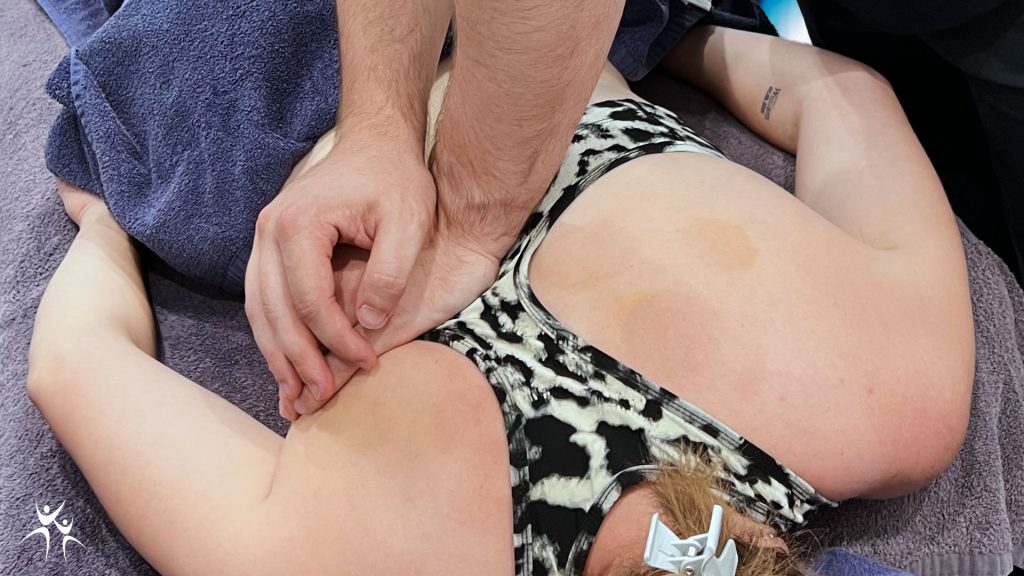
Rotator Cuff Injuries: Understanding shoulder pain and the road to recovery
Do you have shoulder pain that is limiting you in everyday life?
You may have been told that your rotator cuff is the problem. But what does that actually mean?
The term rotator cuff injury covers a range of different conditions, from shoulder pain and tendon irritation through to partial or full-thickness tendon tears.
Understanding what the rotator cuff does, what may contribute to shoulder pain and how it can be managed can help you make sense of your symptoms and your options for recovery.
What is the rotator cuff?
The rotator cuff is a group of four muscles and their tendons that surround the shoulder joint.
These muscles help control shoulder movement and contribute to keeping the head of the upper arm bone, or humerus, positioned appropriately within the shoulder joint as you move.
Your shoulder is designed to move through a very large range of motion. The rotator cuff plays an important role in helping provide controlled movement and stability during that movement.
What does a rotator cuff injury mean?
“Rotator cuff injury” is a broad term.
It can include:
- shoulder pain associated with the rotator cuff
- irritation or changes involving the tendons
- tendinopathy
- partial-thickness tendon tears
- full-thickness tendon tears.
These different presentations can have different causes, symptoms and management approaches.
Importantly, a tendon abnormality does not automatically mean it is the cause of your pain.
Changes in the rotator cuff tendons can occur as we get older and may be present in people who don't experience shoulder pain.
This is one reason why an individual assessment is important rather than relying on an imaging result alone.
What causes rotator cuff pain?
Sometimes shoulder pain begins after an obvious event, such as:
- lifting something heavy
- falling onto your arm
- a forceful or unexpected movement
- a sporting injury.
Other shoulder problems develop gradually.
Repetitive activities involving the shoulder — particularly repeated lifting or overhead work, can place increased demands on the shoulder.
Sporting activities such as swimming, throwing and racquet sports can also involve repeated or high-load shoulder movements.
However, shoulder pain isn't always simply a case of “wear and tear”.
Our tendons naturally change over time, and these changes don't necessarily cause pain. Similarly, findings on an ultrasound or MRI need to be considered alongside your symptoms and physical assessment.
The relationship between imaging findings and pain isn't always straightforward.
That's why understanding how your shoulder is behaving, what movements aggravate your symptoms and what your goals are is important when developing a management plan.
What does a rotator cuff injury feel like?
Symptoms can vary depending on the individual and the type of shoulder problem involved.
Common symptoms may include:
- pain when lifting or reaching with the arm
- difficulty reaching overhead
- pain when lying on the affected shoulder
- a feeling of weakness in the shoulder or arm
- reduced shoulder movement
- pain during particular sporting or work activities.
Some people notice symptoms gradually, while others develop shoulder pain following a specific injury.
Pain can also vary from day to day and may be influenced by factors such as activity levels, sleep, workload and how much load your shoulder is currently accustomed to handling.
How is a rotator cuff injury assessed?
If you're experiencing ongoing shoulder pain, an osteopath or other appropriate healthcare professional can take a detailed history and perform a physical assessment.
This may include looking at:
- your shoulder movement
- strength and function
- activities that aggravate or relieve your symptoms
- the neck and upper back
- other factors that may influence shoulder movement and function.
Imaging such as an ultrasound or MRI may be appropriate in some circumstances, particularly where the findings would help guide further management.
However, imaging isn't always required for every case of shoulder pain.
Your healthcare professional can help determine whether further investigation or referral is appropriate.
How can osteopathy help with shoulder pain?
An osteopath can assess your shoulder alongside surrounding areas, including the neck, upper back and other structures involved in shoulder movement.
Depending on the findings of your assessment, your osteopath may develop an individualised management plan that can include:
- hands-on treatment
- exercise
- movement advice
- education about your symptoms
- strategies to gradually return to activities that are important to you.
Hands-on treatment may be used as one part of a broader management approach to help manage symptoms and support comfortable movement.
Importantly, hands-on treatment should not be presented as a way of “repairing” a torn tendon.
If there is a significant tendon tear, the appropriate management will depend on the nature of the injury, your symptoms, functional limitations and individual goals. In some cases, referral to another healthcare professional may be appropriate.
Exercise and rehabilitation
Progressive exercise and loading are important components of rehabilitation for many rotator cuff and shoulder problems.
Your shoulder may need time to gradually adapt to increased loads, particularly if pain has limited your activity for a period of time.
An osteopath may work with you to identify appropriate exercises and progress them according to your symptoms, capacity and goals.
This might involve starting with relatively simple movements and gradually increasing the amount of resistance, repetitions or functional demand as your shoulder becomes more capable.
The goal isn't necessarily to avoid every movement that causes discomfort.
Instead, rehabilitation often involves finding an appropriate level of activity and gradually building your capacity.
There isn't one treatment for every shoulder problem
One of the most important things to understand about rotator cuff injuries is that not every shoulder problem is the same.
The most appropriate approach depends on factors including:
- your symptoms
- how your shoulder was injured
- your examination findings
- your current strength and movement
- your work, sport and lifestyle demands
- your goals
- how you respond to management.
If you're experiencing persistent shoulder pain, weakness or difficulty using your arm, an assessment can help you understand what may be contributing to your symptoms and whether further investigation or treatment is appropriate.
The road to recovery isn't always about finding one treatment that fixes everything.
It's about understanding your individual presentation, managing your symptoms and progressively working towards the activities that matter to you.