
Posture, workplace ergonomics & osteopathy
Looking after your body at work
Whether you work from home, spend your day at a desk, drive for long periods or are on your feet all day, work can mean spending a lot of time in the same positions or repeating the same movements.
When neck, shoulder or back discomfort appears, it’s easy to blame 'bad posture.' But posture and pain are more complicated than simply needing to sit up straighter.
Understanding workplace ergonomics, varying your position and building regular movement into your workday can all play a role in making your working environment more comfortable.
Is there really such a thing as 'perfect' posture?
We often hear about 'good' and 'bad' posture, but there isn’t one perfect position that everyone needs to maintain throughout the day.
Our bodies are designed to move and can generally tolerate many different positions. Sitting upright isn't automatically 'good', just as occasionally slouching isn't automatically 'bad'.
Instead of concentrating solely on how you sit or stand, it can be useful to consider how long you remain in the same position and how much movement you get throughout your working day.
Long periods of sitting or standing with limited movement may contribute to fatigue, stiffness or discomfort for some people.
A useful way to think about posture is:
Your best posture may simply be your next posture.
In other words, rather than trying to hold yourself in one supposedly perfect position all day, aim to change positions and move regularly.
Simple workplace ergonomics tips
Workplace ergonomics is about adapting your work environment and tasks to the person doing them.
You don't necessarily need an expensive ergonomic chair or elaborate standing desk. Sometimes relatively simple adjustments can make your workstation more comfortable.
1. Check your screen position
Position your computer screen so you can view it comfortably without repeatedly craning your neck forward, looking significantly down or rotating your head.
If you use two screens, consider which one you use most frequently and position your workstation accordingly.
2. Keep your keyboard and mouse within easy reach
Your keyboard, mouse and other frequently used equipment should be positioned so you don't have to continually stretch or reach for them.
If you're working on a laptop for extended periods, an external keyboard and mouse may provide more flexibility in how you position your screen and working area.
3. Support your feet
When sitting, aim for a position where your feet are comfortably supported by the floor or a footrest.
4. Don't try to hold one position all day
Rather than worrying about maintaining an 'ideal' sitting position, change things up.
You might alternate between sitting and standing, adjust your chair position, take a phone call while standing or walk around when your work allows.
5. Build movement into your workday
Regular movement can help break up prolonged periods of sitting or standing.
That doesn't necessarily mean doing a full stretching routine every half hour. It could be as simple as standing up, walking to get some water, changing position, taking a short walk or performing another work task that requires movement.
Small opportunities to move throughout the day can add up.
What about people who work on their feet?
Workplace ergonomics isn't just for office workers.
Healthcare workers, tradespeople, retail staff, hospitality workers, factory workers and others spend much of their working day standing, lifting, reaching, bending or performing repetitive movements.
In these situations, ergonomics may involve considering factors such as:
- how frequently tasks are repeated
- the position in which tasks are performed
- lifting and carrying requirements
- available equipment
- opportunities to change tasks or positions
- rest and recovery between physically demanding activities.
The goal isn't necessarily to find one 'correct' way of moving. It is to consider the overall physical demands being placed on your body throughout the working day.
Can osteopathy help with work-related aches and pains?
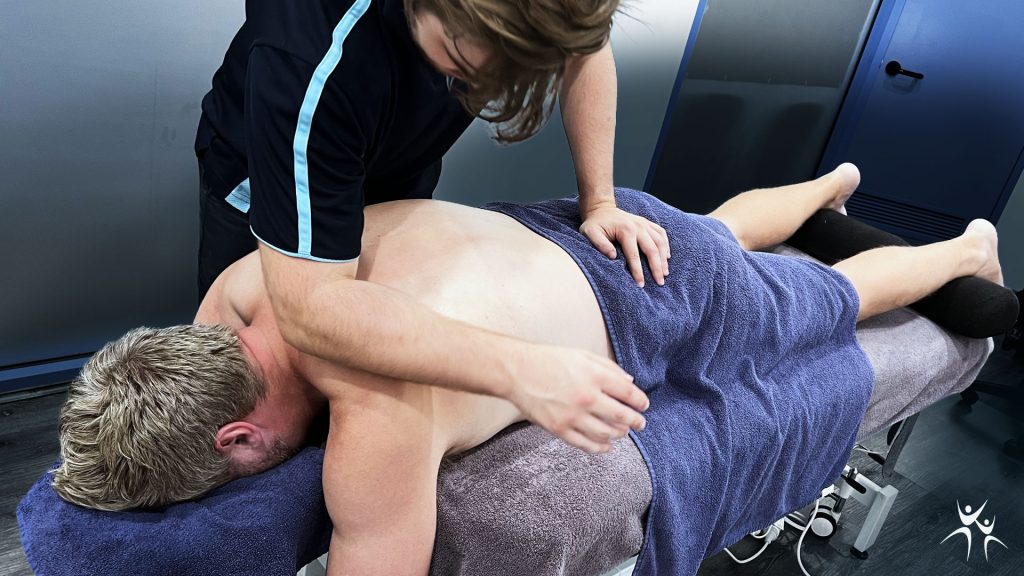
Osteopaths are registered allied health practitioners who assess and manage a range of musculoskeletal presentations.
If you're experiencing aches, stiffness or discomfort associated with work, an osteopath can assess your individual presentation and consider factors that may be relevant to your symptoms.
Depending on your circumstances, this may include looking at your:
- symptoms and health history
- movement and physical function
- work activities and physical demands
- workstation or working environment
- activity and exercise levels
- factors that aggravate or relieve your symptoms.
Following an assessment, management may include hands-on techniques where clinically appropriate, advice about movement and activity, individualised exercises, self-management strategies and discussion about workplace ergonomics relevant to your presentation.
Importantly, there isn't one treatment or ergonomic setup that is right for everybody. Recommendations should be based on your individual circumstances, clinical findings and goals.
Should an osteopath 'fix' your posture?
Posture isn't necessarily something that needs to be 'fixed'.
While certain positions or activities may be associated with symptoms for an individual, this doesn't automatically mean their posture is abnormal or causing damage.
An osteopathic assessment can instead look at the broader picture, including your symptoms, movement, physical capacity, work demands and the amount of time you spend performing particular activities.
Where appropriate, your osteopath may discuss practical modifications or strategies that could make particular work activities more manageable.
When should you seek professional advice?
Occasional aches or stiffness can occur for many reasons. However, consider seeking advice from an appropriate healthcare professional if your symptoms are:
- persistent or worsening
- interfering with work, sleep or everyday activities
- occurring following an injury
- associated with significant weakness or numbness
- accompanied by other unexplained symptoms.
Some symptoms require more urgent medical assessment. Seek prompt medical advice if pain is accompanied by symptoms such as significant or progressive weakness, changes in bladder or bowel control, fever or unexplained weight loss.
If you're unsure about your symptoms, speak with an appropriate healthcare professional.
The bottom line: Move more, not 'perfectly'
Looking after your body at work isn't about maintaining perfect posture for eight hours a day.
A more practical approach is to vary your position, move regularly and organise your working environment around your individual needs and the tasks you perform.
If work-related musculoskeletal discomfort is persistent or interfering with your everyday activities, an osteopath can assess your individual presentation and discuss management options that may be appropriate for you.
At Rapid Recovery, our osteopaths work with people experiencing a range of musculoskeletal concerns. If you have questions about work-related discomfort or how your work environment may relate to your symptoms, you can book an assessment to discuss your individual circumstances.
This article provides general information only and is not intended to replace individual medical or healthcare advice.